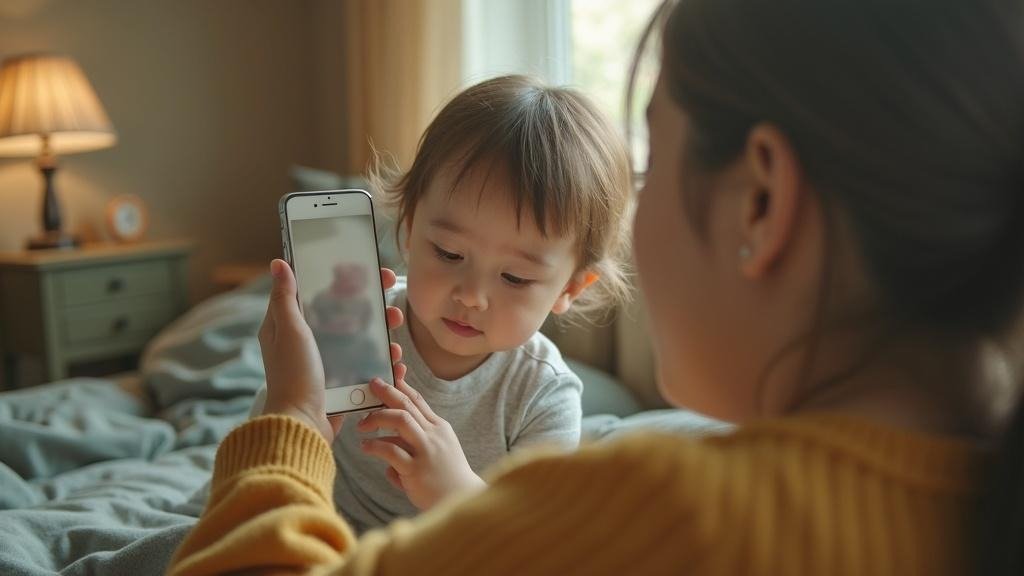

I care less about how polished a speech app looks and more about what happens after five minutes. Does the child practice? Does the parent learn anything? Does the app stay usable?
Here’s where I’ve landed after looking hard at what’s available.
1. Little Words
The thing that separates this one from everything else on this list is the mood check. Before each session, Buddy (the AI companion at the center of the app) asks how the child is feeling and adjusts his energy accordingly. A kid who’s overwhelmed gets a calmer, quieter Buddy. That’s not a gimmick. That’s the kind of regulation-aware design that most drill apps completely ignore.
Buddy keeps track of the child’s name, homes in on their preferred subjects, and picks up each new conversation right where the previous one ended. Sessions are voice-only, so a pre-reader or a kid who freezes up at text menus can still use it without help. When a child mispronounces something, Buddy models the correct sound in his next sentence and keeps going. No buzzer, no “try again,” no visible failure.
Parents get SLP-style PDF reports that you can actually bring to a real therapist appointment. That’s a practical bridge, not just a screen-time tracker.
It’s a practice and engagement tool, not a clinical service, and it doesn’t replace a licensed speech-language pathologist. But for daily repetition between sessions, it’s the most thoughtfully built option I’ve found. Free trial available, then a subscription managed through your device settings. COPPA compliant, no ads.
2. Speech Blubs
Over 1,500 activities, and it’s voice-controlled from the start. Speech Blubs targets kids with apraxia, autism, ADHD, and speech delay, and it uses video models (real faces, real mouths) alongside the activities, which matters for kids who learn by watching articulation. The monthly rate is around $14.49, or you can commit to a full year for $59.99 paid upfront. It’s more structured than Little Words, which some families prefer.
See also: Smart Clothing Technology
3. Articulation Station (Little Bee Speech)
Built by speech-language pathologists and it shows. The app covers more than 1,200 target words organized by individual sounds, which makes it genuinely useful for targeted articulation work. The Pro version opens up everything for a flat one-time fee of around $59.99, with no recurring charges attached. If you already know your child is working on a specific phoneme, this is the most direct tool for drilling it. Not playful. Very focused. That’s the point.
4. Otsimo
Otsimo uses AI-driven feedback and positions itself specifically for kids with autism, apraxia, Down syndrome, and non-verbal communication challenges. Around 200+ exercises. The pricing is accessible compared to most in this category: roughly $6.99 per month, or closer to $4.49 per month on an annual plan. The lifetime option runs about $115.99. Worth considering if you want something structured and affordable for a child with significant support needs.
5. Constant Therapy
This one skews older and is used across a broader age range, including adult rehab, but it has solid evidence-based foundations and can work for school-age kids with language challenges. It’s more clinical in feel than anything else on this list. Good for families who want something that mirrors what a therapist might assign, rather than a game-first experience.
6. Tactus Therapy Apps
Tactus makes a suite of individual clinical apps rather than one all-in-one product. Prices range from about $9.99 to $99.99 depending on the app. The advantage is specificity: you pick the app that targets the exact skill area you need. The disadvantage is that it takes some research to know which one applies to your child. Best used alongside a therapist who can point you toward the right module.
7. Working With a Licensed SLP, Face to Face or Through a Telehealth Platform
This should probably be higher on any honest list. Apps are practice tools. A licensed speech-language pathologist is the actual intervention. Telehealth platforms like Expressable have made access easier than it used to be, and free resources from ASHA (the American Speech-Language-Hearing Association) can help parents understand what their child actually needs before spending anything on apps. If you haven’t had a professional evaluation yet, that’s the real starting point.
The honest takeaway: most of these apps are drill tools, and drill tools have their place. But if your child shuts down under pressure, hates flashcard-style repetition, or needs something that fits around a shorter attention span, the newer AI-companion format genuinely changes the experience. Start with the free trial on Little Words if that sounds like your kid. Go to Articulation Station if you already have a target sound and want concentrated practice. And keep your SLP in the loop either way.
Common Questions
Does Little Words actually replace speech therapy for kids?
No, and the app doesn’t claim otherwise. Little Words is a between-session practice tool. The SLP-style PDF reports it generates are designed to bring to a real therapist appointment, not to substitute for one. Think of it as structured daily repetition, not clinical intervention.
Which of these apps works best if a child has apraxia specifically?
Speech Blubs and Otsimo both name apraxia as a target population. Speech Blubs uses video models of real mouths forming sounds, which is particularly relevant for apraxia since the condition involves motor planning, not just sound awareness. Articulation Station is also used for apraxia work, especially when a therapist has already identified the specific phonemes to drill.
Is there a meaningful difference between Tactus Therapy apps and something like Articulation Station?
Yes. Articulation Station is one focused product covering 1,200+ words organized by sound, sold at a single price. Tactus is a suite of separate apps, each targeting a different skill area, priced individually from roughly $9.99 to $99.99. Tactus suits families working with a therapist who can direct them to the right module. Articulation Station is easier to pick up without that guidance.
At what age do these apps stop being appropriate, and when should a family move to something more clinical?
Most of the game-forward apps here, like Speech Blubs and Little Words, are built for preschool through early elementary. Constant Therapy extends into older school-age kids and adult rehab. If a child is past early elementary and still has significant speech challenges, a professional evaluation through ASHA-certified channels is a better next step than adding another app.
How does Otsimo’s pricing compare when you’re budgeting for a child with long-term support needs?
Otsimo’s lifetime purchase at roughly $115.99 is the most cost-effective option over time for families expecting ongoing use. At $6.99 per month, you’d hit that same amount in about 16 months. Articulation Station’s one-time Pro fee of $59.99 is cheaper still, though it covers a narrower skill set than Otsimo’s 200+ exercises.
Sources
- American Speech-Language-Hearing Association (ASHA): asha.org
- Speech Blubs pricing and feature descriptions: official App Store and Google Play listings
- Little Bee Speech / Articulation Station: littlebeespeech.com (public product pages)
- Otsimo pricing: official Otsimo website and app store listings
- Tactus Therapy pricing: tactustherapy.com (public product pages)
- Expressable teletherapy: expressable.com (public service descriptions)